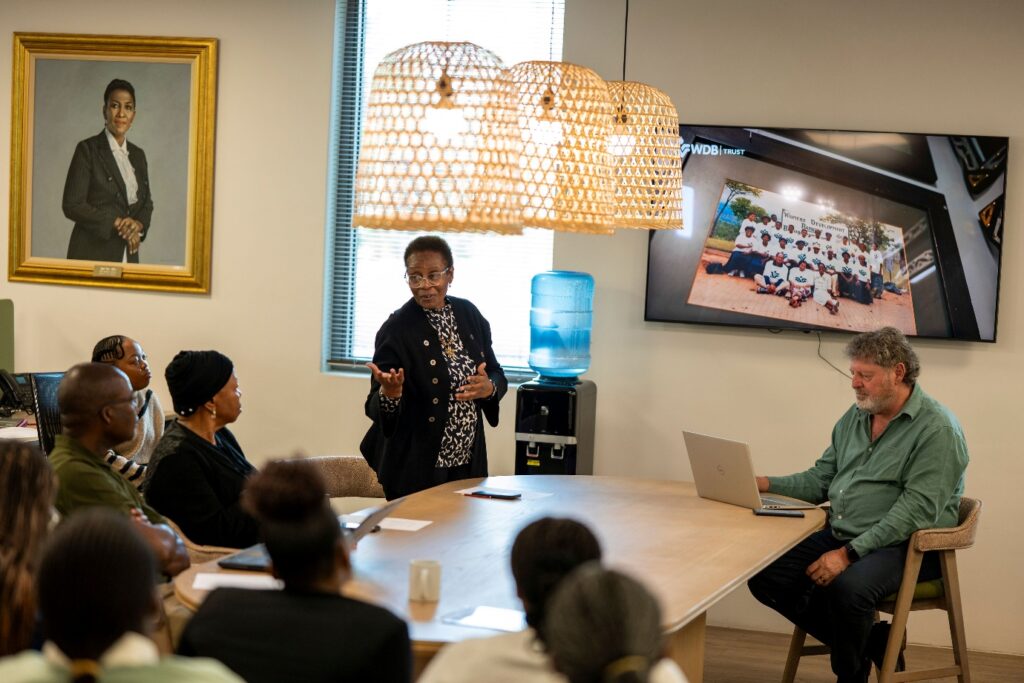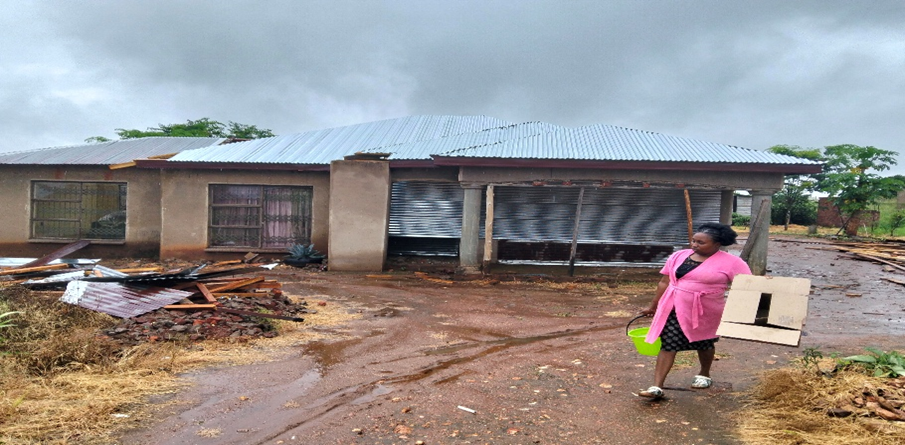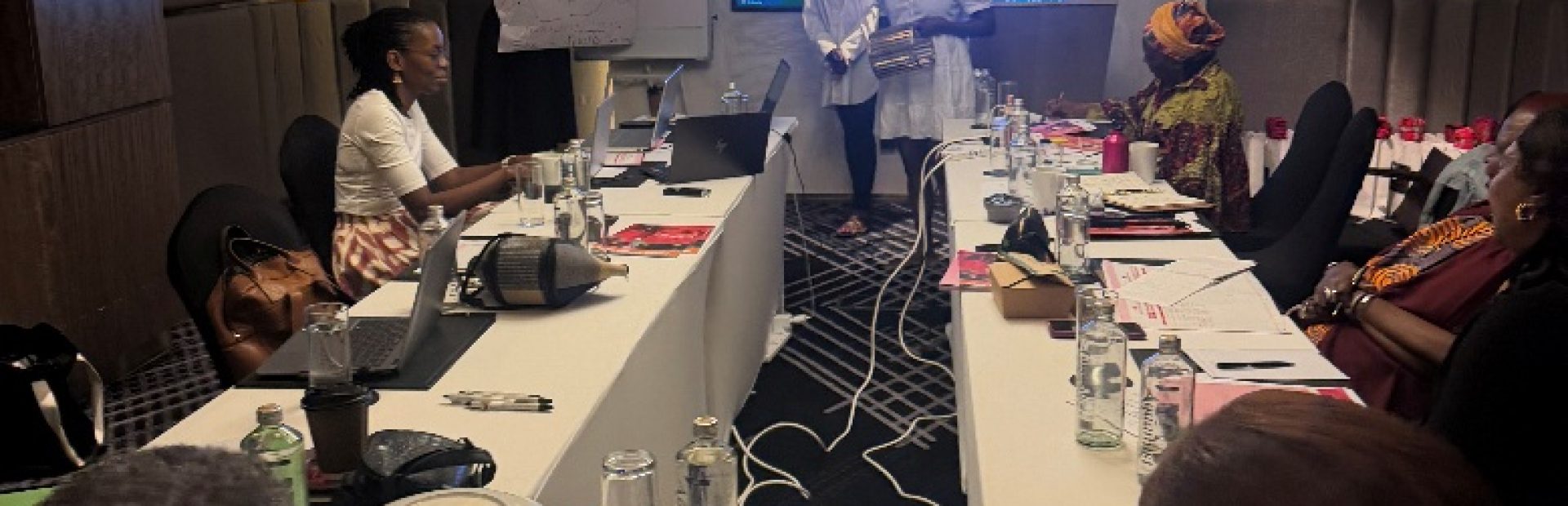
In April 2026, the AfWID Steering Committee gathered in Nairobi, Kenya, for a Strategic Planning Meeting. Their purpose was not simply to plan the next continental Dialogue. It was to reflect on how AfWID can continue to grow as one of Africa’s most influential platforms for women’s leadership, solidarity and collective action.
Since its founding in 2018 by Mrs Zanele Mbeki and housed within the Women’s Development Business (WDB) Trust, AfWID has brought together thousands of women from across the continent to engage in meaningful dialogue on Africa’s most pressing issues. What began as a bold vision has evolved into a vibrant movement where women from diverse backgrounds come together to learn from one another, build lasting relationships and shape a shared agenda for the continent.
As AfWID looks towards its next chapter, the Steering Committee focused on an important question: How can the movement deepen its impact between the Dialogues and remain sustainable?
Over four days, participants explored questions that matter deeply to the future of Africa’s women’s movement. How do we continue building a movement that belongs to all African women? How do we remain rooted in the lived realities of grassroots women while expanding our continental reach? How do we strengthen organising across countries and generations? And how do we continue to lead in ways that are feminist, inclusive and unapologetically Pan-African?
The answers will shape the road to AfWID 2028.
More importantly, they are shaping the future of a movement that continues to demonstrate that African women do not need permission to define their own agenda.
An African Agenda, Shaped by African Women
Across Africa, women are leading businesses, sustaining communities, influencing policy, defending democracy, building peace, advancing science, producing knowledge and transforming economies. Yet too often, the women who are closest to the realities facing the continent are the ones least likely to be in the rooms where decisions are made.
Too many conferences bring together the same familiar voices, the same institutions and the same professional networks. The women who grow our food, organise communities, run informal businesses, care for families, preserve indigenous knowledge and hold local economies together are frequently absent from those conversations.
AfWID was created to change that.
AfWID was born from a simple but powerful conviction: African women need a continental space of their own—one where they can speak to one another across borders, languages, generations and lived experiences, free to define the issues that matter most to them.
It is a space where African women set the agenda. Not governments. Not donors. Not international institutions- African women.
That commitment has shaped the movement from the very beginning.
Unlike many continental gatherings, AfWID asks women to attend as themselves rather than as representatives of institutions. Every woman brings her own lived experience, wisdom and leadership into the room.
The movement’s defining commitment is that at least 60% of the participants must come from grassroots communities.
This principle continues to distinguish AfWID from almost every other continental platform.
For AfWID, “grassroots” is not defined simply by geography. It is about ensuring that women who are too often excluded from centres of influence have an equal opportunity to shape Africa’s future. Whether from rural villages, informal settlements, small towns or urban communities, these women are not invited as observers—they are recognised as leaders whose voices are essential to the continent’s progress.
As one Steering Committee member reminded the meeting:
“The minute we move away from 60% grassroots, we are like any other convening.”
That commitment remains non-negotiable.
Deepening the Movement
Since its founding, AfWID has continued to grow beyond expectations.
The inaugural Dialogue in 2018 brought together more than 1,100 women from Southern Africa. Just one year later, women from all 55 African countries gathered under one roof for the first truly continental Dialogue. Following the interruption caused by the COVID-19 pandemic, AfWID returned in 2025 stronger than ever, welcoming more than 1,360 delegates—the largest gathering in the platform’s history.
Building on this momentum, the Steering Committee gathered in Nairobi to consider the movement’s next phase of growth: How can AfWID strengthen its organising, deepen connections between women across the continent, and ensure that the energy generated during each Dialogue continues to inspire action long after participants return home?
The answer lay in recognising that movements are not built only when thousands gather in conference halls.
They are built between those moments.
They are built when women organise in communities.
When they mentor younger leaders.
When they challenge injustice.
When they strengthen local economies.
When they build solidarity across borders.
When they remain connected long after the closing ceremony.
Throughout the Nairobi meeting, participants repeatedly affirmed that this is the future of AfWID.
As facilitator Hope Chigudu reflected:
“Movements depend very much on organising. Mobilisation, yes, but organising. If you are not organising as a movement, it’s very difficult.”
A Truly Continental Movement
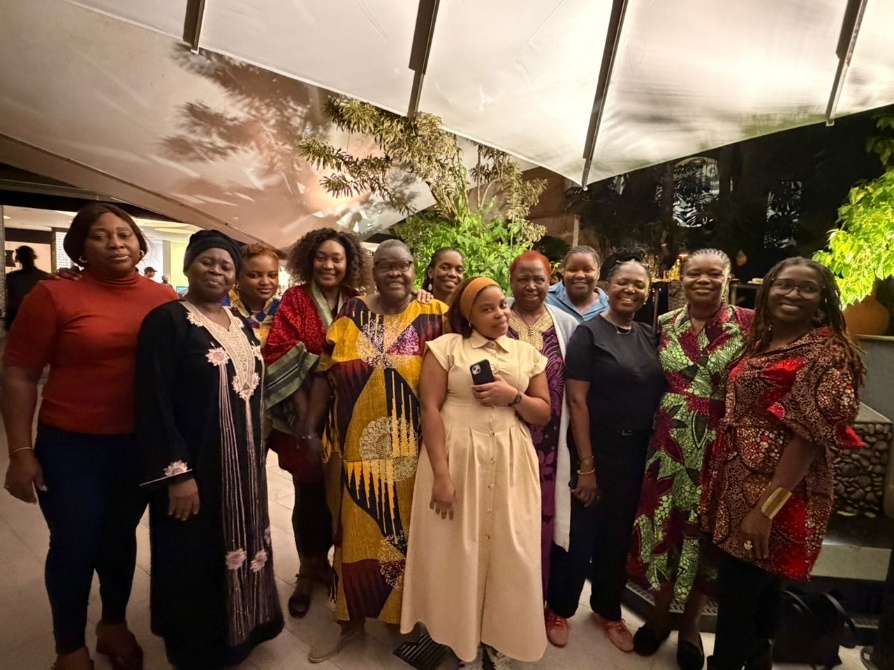
The choice of Nairobi as the venue for the Steering Committee meeting was itself significant.
For the first time, a major AfWID strategic planning meeting took place outside South Africa.
It was a quiet but powerful reminder that AfWID belongs to the continent—not to any one country.
Steering Committee members from North, East, West, Central and Southern Africa came together alongside advisors and the WDB Trust secretariat to reflect on lessons from the movement’s recent review and chart the way forward.
Participants celebrated how far the movement has come while openly acknowledging where it must evolve.
Questions around governance, inclusion, mobilisation, communications, fundraising and political education were explored with the same spirit that has always defined AfWID: dialogue rooted in respect, curiosity and collective purpose.
What emerged was not simply another strategic plan. It was a renewed understanding of what kind of movement AfWID wants to become.
Defining Ourselves on Our Own Terms
One of the most powerful discussions centred on identity. Who is AfWID? How should the movement describe itself? The Steering Committee agreed that answering these questions was about far more than branding, it was about protecting the movement’s soul. One reflection captured that spirit beautifully:
“She has no face. She invites you to come as you are. She invites you to learn what you don’t know. She invites you to validate what you know. She is a platform, a festival of ideas. She is everywhere. She is AfWID.”
Rather than narrowing the movement’s identity, participants embraced its openness.
AfWID belongs equally to the young activist entering her first continental space, the entrepreneur building a business, the farmer organising women in her community, the academic, the artist, the traditional leader, the homemaker, the parliamentarian and the peacebuilder.
Dialogue remains central to that identity.
Not because dialogue alone changes the world, but because authentic dialogue creates the relationships, understanding and trust that make collective action possible.
The format of the 2028 Dialogue will evolve.
Its purpose will not.
It will continue to provide African women with something increasingly rare: a space to think, imagine, challenge and lead together.
Reclaiming the Language of Leadership
Some of the most thoughtful conversations in Nairobi focused not on structures but on words.
Language shapes movements.
Language shapes power.
After robust discussion, the Steering Committee agreed that one word no longer reflected AfWID’s philosophy: Empowerment.
For many years, the term has been central to development discourse.
Yet participants questioned the assumption behind it.
If women already possess agency, wisdom and leadership, who is empowering whom?
The conclusion was clear.
AfWID does not give African women power.
African women already have power.
The movement creates spaces where that agency can be recognised, strengthened and exercised collectively.
As Hope Chigudu reminded participants:
“We don’t have the power to empower. We don’t have that capacity. But we provide tools. We provide spaces. We provide platforms.”
This reflects how AfWID understands leadership—not as something bestowed, but as something already present and waiting to flourish.
It is a philosophy that will shape the movement’s language, programmes and partnerships as it continues to grow.
As AfWID looks ahead to 2028 and beyond, its vision is clear: to strengthen a continent-wide movement where African women connect across borders, generations and sectors, shape their own agenda, and lead lasting change on their own terms. The Dialogue remains at the heart of that vision—but it is the relationships, organising and collective action between the Dialogues that will define AfWID’s enduring legacy.